
General Safety Precautions
- Read Instruction Manual
- Watch the Video – you can watch just sections that are of interest to you
- Unplug your machine when changing parts and blades or doing any maintenance
- Wear Safety Glasses at all times
- Wear a facemask especially with the belt grinder
- Always clamp material being cut in the saw or drilled in the drill press
- Use the Vise and C-Clamps and/or other Auxiliary Clamps when cutting rounds
- Wear gloves and safety glasses when handling blades and take extra care when uncoiling blades which are under tension
- Never wear gloves, jewelry, long sleeves or loose fitting clothes especially when using the drill press
- Never put your hand closer than 4” to a moving blade
- Never reach over a saw while it is in operation
Band Saw Safety
- Unplug your machine before changing parts or doing any maintenance.
- Wear safety glasses and shields to protect your eyes from airborne material.* Wear a facemask to protect your lungs from dust, especially with the belt grinder.
- Always dress correctly. Never wear loose clothing or ties that might get caught in the machine.
- Never wear gloves when using the drill press.
- Use a vise. Never hold the piece being cut with your hands.
- Wear gloves and eye protection when handling the blades.
- Blades are coiled and under tension so it is of utmost importance that you uncoil blades properly.
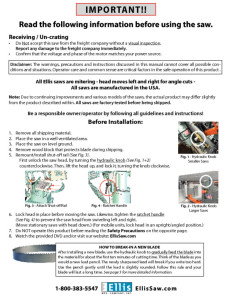
Band Saw Blade FAQ
My band saw is cutting crooked. What’s wrong?
It’s time to replace your band saw blade.
I just put in a new blade and I’m still not getting a good cut. What’s wrong?
New blades must be broken in properly before using. Also check that the blade has the proper tension and the guide bearing spacing and the head weight are set correctly. To break in your new blade, run it at the recommended speed but at only 1/3rd of normal pressure for ten minutes. Then gradually increase the pressure back to normal using the hydraulic cylinder. This will increase the life of your new blade and made it work more efficiently. Check the wear and adjustment of your guide bearings every time you change blades.
There’s a large section of teeth gone on my blade. What happened?
More than likely you hit some hard spots in your material, you may have had too much head weight or too many teeth in the work. You should never have more than 24 teeth in the work or less than three. Six to 12 is optimum.
Why are cracks forming on my blade?
This is called blade fatigue and is caused by improper tension or head weight.
My blade appears to be dull and has quit cutting- what’s wrong?
You may have hit some hard spots in your material or you were using the saw at too fast a speed.
How do I reverse the direction of the teeth on the blade?
Sometimes when you uncoil a new blade you will notice that the teeth are going the wrong way for your saw. Put on safety glasses and gloves and hold the blade in front of you with the teeth pointing toward you. Turn the blade inside out by simply flipping the teeth away from you.
What’s the best way to cut round stock and pipe?
Use our pipe clamp and table back extension.
How do I cut bundles of stock?
Use our screw vise and auxiliary clamps for more positive clamping.
How do I cut thin gauge or odd shaped materials?
Use jigs and block fixtures to stop distortion.
How do I cut softer nonferrous materials like aluminum,
When cutting these softer materials you should
- Slow down your speed — the higher speeds produce heat, which melts the soft material, which then plugs the gullets of the teeth.
- Change to a courser tooth blade — fewer teeth per inch. The gullets on these blade are larger and therefore less likely to get plugged up.
- Use our Air System — this keeps the gullets from getting plugged up and helps to keep the blade cool.
Can I use a liquid coolant on my Ellis saw?
No. We do not recommend ever using a liquid coolant on the Ellis saws.
I’m cutting multiple pieces of the same size. Is there an easy way to do this?
Yes, by use of our stop gauge accessory.
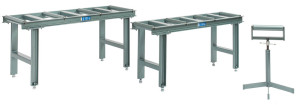
How do I support long pieces of stock?
Use the stock support stands we manufacture that attach to the saw. The model of stand to use will depend on which saw you are using. Our freestanding models can be used alone or as an extension for the larger stock stands.
Adjusting the Head Pressure
The head pressure should be checked every three to four months. This is done with the aid of a pole-type scale, commonly called a fisherman’s scale.
Take the scale and hook it on to the saw head handle and raise the blade about one inch off the cutting table. Then bring the saw head down while reading the scale.
The saw should weigh no more than eight pounds over that last inch of travel.
If the weight on the scale is more than eight pounds it means the compensating springs must be adjusted.
The adjustment for the springs is under the pulley box on the back of the saw head.
Simply turn the head weight adjustment knob clockwise and recheck the weight of the saw head until it reads eight pounds
Adjusting Guide Bearings
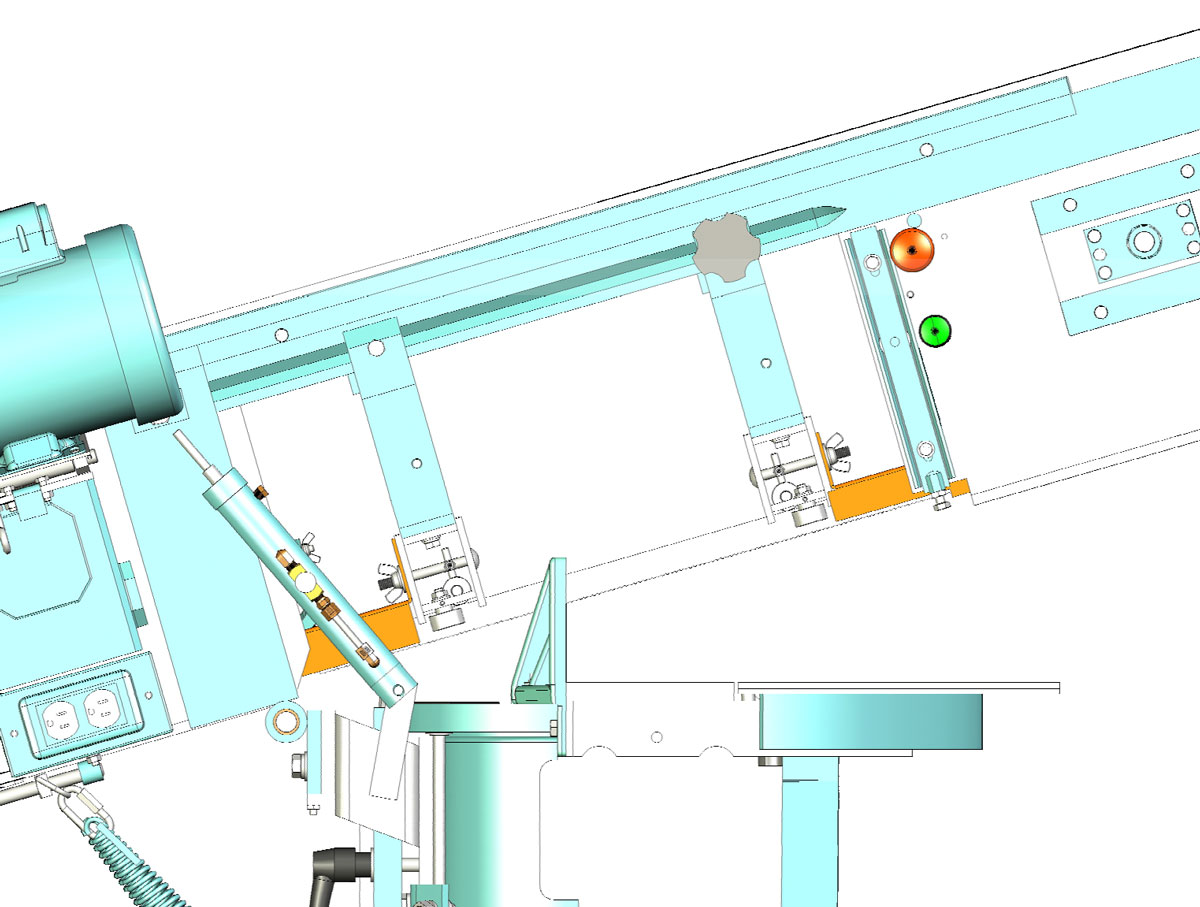 To be properly adjusted, the bearings must be set to one-thousandth of an inch wider that the thickness of the blade you are using.
The most accurate way to determine this is by using a feeler gauge set to the thickness of the blade plus one-thousandth of an inch.
If you are not able to use a feeler gauge, you can look down the blade with enough light to determine if there is any space between the bearings and the blade itself.
A third way to check if the guides are adjusted properly is to grasp the blade between the guide and the housing and twist it. If the gap is adjusted correctly, there will be no movement on the cutting portion of the blade. Repeat the procedure between the other guide and the housing on that side.
The pressure bearing rides on the top edge of the blade and holds the blade down on the work during the cutting. Over time this bearing will wear and will need to be replaced.
In order to check that the bearings are wearing evenly, take a straight edge and hold it against the side of the bearing. It should sit flush against the side. If there is a gap at the top or the bottom, the bearing needs to be replaced.